
Introduction
Have you ever been in the mood for something light, healthy, yet incredibly satisfying? If so, a Grecian Salad is just what you need. This refreshing dish, rooted deeply in Mediterranean tradition, combines the bright and bold flavors of ripe tomatoes, crisp cucumbers, tangy feta cheese, and briny olives. These ingredients come together to create a salad that is as flavorful as it is nutritious.
But why is the Grecian Salad so beloved? Not only does it offer a burst of vibrant colors and tastes, but it also provides numerous health benefits thanks to its fresh, wholesome ingredients. If you’re looking for a dish that’s simple to prepare yet packed with flavor, the Grecian Salad is an ideal choice. This versatile salad can be a light meal on its own or a delicious side dish to complement a main course.
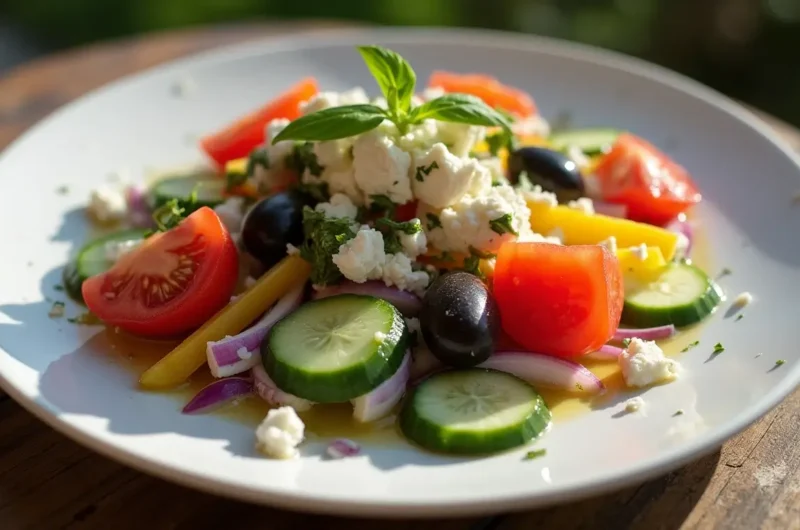
Grecian Salad
Course: Lunch4
servings15
minutes200
kcal15
minutesIngredients
1 cup cherry tomatoes, halved
1 cucumber, sliced
1/2 red onion, thinly sliced
1/2 cup Kalamata olives
1/2 cup feta cheese, crumbled
2 tablespoons extra virgin olive oil
1 tablespoon red wine vinegar
1 teaspoon dried oregano
Salt and freshly ground black pepper, to taste
Preparation Instructions:
- In a large salad bowl, combine the cherry tomatoes, cucumber slices, red onion, and Kalamata olives.
- In a small bowl, whisk together the olive oil, red wine vinegar, dried oregano, salt, and pepper to create the dressing.
- Pour the dressing over the salad and toss gently to combine.
- Sprinkle the crumbled feta cheese over the top of the salad.
- Serve immediately, or refrigerate for 15 minutes to allow the flavors to meld.
Notes
- For added protein, consider topping the salad with grilled chicken or chickpeas.
This salad pairs well with warm pita bread or as a side to grilled meats.
To reduce sodium, rinse the olives and use low-sodium feta cheese.
Table of Contents
In this guide, you will learn everything you need to know to make the perfect Grecian Salad at home. We’ll explore the essential ingredients, step-by-step preparation, creative variations, and pro tips to help you make a salad that captures the authentic flavors of Greece. Whether you’re a beginner cook or an experienced chef, we’ll make sure you’re equipped to create this iconic Mediterranean dish with ease. So, let’s dive into the world of Grecian Salad and discover how easy and enjoyable it is to bring the flavors of Greece to your own kitchen.
What Is a Grecian Salad? A Brief Overview
The Grecian Salad is a dish that transcends time and borders. It’s not just a salad; it’s a symbol of Mediterranean simplicity and balance. Originating from the sun-drenched landscapes of Greece, this salad has become a beloved staple in kitchens worldwide. But what exactly defines a Grecian Salad, and what makes it so special?
At its core, a Grecian Salad is all about fresh, natural ingredients. It’s a celebration of vegetables, cheese, and olive oil—a combination that’s at the heart of Mediterranean cuisine. The dish typically includes ingredients like tomatoes, cucumbers, red onions, olives, and feta cheese, all brought together with a drizzle of high-quality olive oil and a sprinkle of oregano.
Origins of Grecian Salad in Mediterranean Cuisine
Grecian Salad, or Horiatiki, is deeply embedded in the culinary culture of Greece. Traditionally, this salad is served during the summer months, showcasing the best of the season’s produce. The dish is designed to be simple, yet every bite bursts with a range of textures and flavors—from the sweetness of tomatoes to the creaminess of feta cheese, all enhanced by the richness of olive oil.
In Greece, this salad is often enjoyed as a light lunch, a side dish at dinner, or even as a snack. It reflects the Mediterranean philosophy of eating fresh, local ingredients in a way that enhances their natural flavors.
Key Ingredients That Define Its Authentic Taste
Several key ingredients make up the foundation of a traditional Grecian Salad, each contributing its own unique flavor and texture to the mix:
- Tomatoes: Typically cut into wedges, these juicy red gems provide the salad with a burst of sweetness.
- Cucumbers: Crisp and hydrating, cucumbers add a refreshing crunch.
- Red onions: These are sliced thin to offer a sharp, slightly spicy contrast to the other ingredients.
- Olives (usually Kalamata): Known for their deep, salty flavor, Kalamata olives are the traditional choice, though green olives can also be used.
- Feta cheese: A key element, feta adds a tangy, creamy texture to balance the other flavors.
- Olive oil: A generous drizzle of high-quality extra virgin olive oil ties the whole salad together, enhancing the flavors of the other ingredients.
- Oregano: A sprinkle of dried oregano is essential for that authentic Mediterranean touch.
Each of these ingredients serves a purpose, from balancing flavors to providing nutrients. Together, they create a harmonious dish that reflects the essence of Greek cuisine.
Ingredients Needed for the Perfect Grecian Salad
When it comes to crafting the best Grecian Salad, using fresh and high-quality ingredients is crucial. The simplicity of this dish means that each element plays a vital role in creating the authentic flavors that make Grecian Salad so irresistible. In this section, we’ll walk you through the essential components of the salad, along with some substitutions for those with dietary preferences or restrictions.
Must-Have Ingredients:
To make a traditional Grecian Salad, these are the ingredients you’ll need:
- Tomatoes: Opt for ripe, firm tomatoes, preferably heirloom or vine-ripened. The tomatoes should be juicy and vibrant to provide a refreshing burst of flavor.
- Cucumbers: Choose cucumbers that are fresh, with a firm texture and minimal seeds. English cucumbers are often preferred for their mild flavor and lack of bitterness.
- Red onions: For the perfect balance of sharpness, slice red onions thinly. Their pungency adds depth to the salad, complementing the other ingredients.
- Kalamata olives: The signature olives for this salad, Kalamata olives are large, dark, and rich in flavor. If unavailable, green olives can be substituted for a milder taste.
- Feta cheese: Feta is the key to bringing the creamy, salty touch that makes Grecian Salad so iconic. Traditionally, it is served in large blocks, but you can also find crumbled feta for convenience.
- Extra virgin olive oil: The quality of olive oil matters greatly here. A good, fresh extra virgin olive oil enhances the natural flavors of the salad and adds a luxurious richness.
- Dried oregano: This is a must-have herb for that unmistakable Mediterranean flavor. A sprinkle of oregano gives the salad an aromatic touch, tying everything together.
- Salt and pepper: Simple seasonings, but they go a long way in elevating the flavors.
Ingredient Substitutions:
While the classic Grecian Salad is quite specific, there are a few substitutions you can make to suit various dietary needs or preferences:
- Vegan alternatives: If you’re following a vegan diet, you can replace the feta with plant-based feta options made from tofu, cashews, or almonds. Many supermarkets offer a range of vegan feta that still provides that creamy, tangy flavor.
- Low-sodium version: For those watching their sodium intake, opt for reduced-salt feta cheese and rinse your olives before adding them to the salad. This helps maintain the signature salty flavor without the extra sodium.
- Gluten-free variations: Grecian Salad is naturally gluten-free, but if you’re looking for a heartier meal, you can add cooked quinoa or brown rice. This gives the salad more substance while keeping it gluten-free.
- Additional toppings: If you’d like to enhance the salad further, consider adding capers for an extra briny flavor, or even roasted red peppers for a smoky twist. You can also toss in some fresh herbs like parsley or basil for added freshness.
By ensuring you have all the right ingredients and knowing how to make adjustments, you’ll be able to create the perfect Grecian Salad tailored to your tastes.
Step-by-Step Guide to Making the Best Grecian Salad
Now that you know the essential ingredients for a perfect Grecian Salad, it’s time to dive into the preparation process. Crafting this classic Mediterranean dish doesn’t require complicated techniques, but knowing the right steps ensures you’ll get the most flavor out of each ingredient. Whether you’re a beginner in the kitchen or just looking for a simple guide, this step-by-step approach will help you create a delicious Grecian Salad every time.
Preparation Tips for Each Ingredient:
To get the most out of your ingredients, it’s essential to prepare them properly. Here are some helpful tips:
- Tomatoes: Cut your tomatoes into wedges or large chunks. If the tomatoes are particularly juicy, you can gently remove the seeds to prevent excess water in the salad.
- Cucumbers: Peel the cucumbers if the skin is thick or waxed. Otherwise, leaving the skin on adds color and extra nutrients. Slice them into thin half-moons or chunks for that perfect crunch.
- Red onions: Slice the onions thinly to avoid overpowering the salad with their sharp flavor. If you find red onions too pungent, you can soak the slices in water for a few minutes to mellow out their bite.
- Olives: If using whole Kalamata olives, make sure to pit them. You can also slightly crush them with the back of a spoon to release more flavor into the salad.
Step-by-Step Instructions for Assembling the Salad:
- Start with the base: In a large salad bowl, combine the tomatoes, cucumbers, and red onions. These vegetables form the foundation of your Grecian Salad and provide the fresh, crisp texture.
- Add the olives: Toss in your Kalamata olives (or green olives if you prefer). They’ll add a salty, briny contrast that perfectly balances the freshness of the vegetables.
- Top with feta: Break your block of feta cheese into large chunks or crumble it, depending on your preference. Feta should be the star of the dish, so be generous with it!
- Drizzle the olive oil: Pour a generous amount of extra virgin olive oil over the salad. This not only enhances the flavors but also ties all the ingredients together.
- Season with oregano: Sprinkle dried oregano over the salad. This herb is essential for that authentic Mediterranean flavor.
- Season with salt and pepper: Add salt and pepper to taste, but remember that feta and olives already provide a fair amount of saltiness, so be cautious with how much you use.
Pro Tips for Perfecting the Flavor:
- Balance the acidity: If you prefer a bit more acidity, squeeze fresh lemon juice over the salad right before serving. This addition will brighten up the flavors even more.
- Toss gently: Grecian Salad doesn’t need to be aggressively tossed. Gently mix the ingredients so that the feta remains in chunks and doesn’t crumble into a fine consistency.
- Serve immediately: While you can prep the salad ahead of time, it’s best served fresh to preserve the crispness of the vegetables. If you need to prepare it in advance, store the dressing separately to avoid sogginess.
By following these simple steps, you’ll be able to assemble the best Grecian Salad at home. Whether you’re serving it at a family dinner or preparing it for a quick lunch, these instructions will ensure you capture the authentic flavors and textures that make this dish so irresistible.
To elevate your understanding and see the dish come to life, don’t miss this beautifully shot and easy-to-follow video. It visually walks you through each step, making it easier to replicate the authentic taste at home.
Creative Variations of Grecian Salad
While the traditional Grecian Salad is a beloved classic, there are plenty of creative ways to make this dish your own. Whether you’re following a specific dietary plan or simply want to try something new, there are many variations you can experiment with. These tweaks not only keep the salad exciting but also allow you to enjoy the dish in different ways, all while maintaining the core Mediterranean essence.
Vegan Adaptation of Grecian Salad
For those following a vegan lifestyle, you can easily modify the Grecian Salad to meet your needs without sacrificing flavor. The key ingredient to replace is the feta cheese. Fortunately, there are several plant-based alternatives that work wonderfully in this dish:
- Vegan feta: You can find vegan feta made from ingredients like tofu, cashews, or almond-based cheeses. These provide a similar creamy texture and tangy flavor, offering a great substitution for traditional feta.
- Tofu or tempeh: For a protein boost, consider adding crumbled tofu or sliced tempeh to your Grecian Salad. Marinate them in lemon juice, olive oil, and a bit of oregano to infuse them with Mediterranean flavors.
The rest of the ingredients—tomatoes, cucumbers, olives, and olive oil—remain unchanged in this vegan version, ensuring the salad stays fresh, light, and bursting with flavor.
Gluten-Free Version with Grains
If you’re looking for a heartier, gluten-free version of the Grecian Salad, you can easily add grains to the mix. Quinoa is a great gluten-free option that adds both texture and protein. Here’s how you can incorporate it:
- Cooked quinoa: Add a cup of cooked quinoa to your Grecian Salad for extra bulk and nutrition. Quinoa’s mild, nutty flavor complements the fresh vegetables and feta perfectly.
- Brown rice: Another gluten-free alternative is brown rice. Its chewy texture and earthy flavor pair well with the crispness of the cucumbers and the brininess of the olives.
These additions transform the salad into a more substantial meal while keeping it fresh and full of Mediterranean charm.
Regional Twists on the Classic Grecian Salad
For those looking to explore regional variations of Grecian Salad, there are several delightful twists you can try. Here are a few ideas:
- Roasted red peppers: Adding roasted red peppers brings a smoky, sweet flavor to the salad, enhancing its complexity. The peppers blend beautifully with the other ingredients, creating a more robust flavor profile.
- Capers: These tiny, briny delights are often added in Greek cuisine for an extra burst of saltiness. A few capers sprinkled over your Grecian Salad will provide an additional layer of flavor and texture.
- Avocado: For a creamy twist, try adding sliced avocado to your Grecian Salad. Its smooth texture contrasts nicely with the crisp vegetables and tangy feta.
These regional twists give you the freedom to tailor your Grecian Salad to different tastes and occasions, making it even more versatile and fun to prepare.

Health Benefits of Grecian Salad Ingredients
One of the main reasons Grecian Salad is so popular is that it not only tastes fantastic but also offers a range of health benefits. The combination of fresh vegetables, healthy fats, and nutrient-rich ingredients makes this Mediterranean dish a nourishing choice for any meal. In this section, we’ll break down the nutritional benefits of some of the key ingredients found in a Grecian Salad, so you can feel good about enjoying this delicious dish.
Tomatoes: Rich in Antioxidants and Vitamins
Tomatoes are a cornerstone of the Grecian Salad and provide a wealth of nutritional benefits. They’re an excellent source of vitamin C, which supports immune function, and are also packed with antioxidants like lycopene. Lycopene is particularly beneficial for heart health and may reduce the risk of certain cancers. Additionally, tomatoes are low in calories, making them a perfect option for anyone looking to maintain a healthy weight.
Cucumbers: Hydrating and Low-Calorie
Cucumbers, often a prominent ingredient in a Grecian Salad, are incredibly hydrating due to their high water content (about 95%). This makes them a fantastic choice for keeping your body hydrated and promoting healthy skin. Cucumbers are also low in calories, which makes them ideal for anyone watching their calorie intake. Additionally, cucumbers are rich in fiber, which supports digestive health and helps keep you feeling full longer.
Feta Cheese: Protein and Calcium Powerhouse
Feta cheese is not only the star of the Grecian Salad in terms of flavor, but it also brings a host of health benefits. Feta provides protein, which is essential for muscle repair and growth, and it’s a great source of calcium, which is important for bone health. While feta is relatively high in sodium, it’s still a nutrient-dense ingredient when enjoyed in moderation. If you’re concerned about the sodium content, consider opting for reduced-sodium feta or balancing it with low-sodium vegetables and herbs.
Olives: Healthy Fats and Antioxidants
Olives are a key ingredient in Grecian Salad, offering both healthy monounsaturated fats and powerful antioxidants. These fats help to reduce bad cholesterol levels, supporting heart health. Olives also contain vitamin E, which acts as a potent antioxidant to fight oxidative stress in the body. The inclusion of olives in the salad adds a delicious savory depth while contributing to long-term wellness.
Olive Oil: The Heart-Healthy Fat
Extra virgin olive oil, the dressing of choice for a Grecian Salad, is one of the healthiest fats you can consume. It’s rich in monounsaturated fats that help reduce inflammation and lower the risk of heart disease. Olive oil also contains polyphenols, which have antioxidant properties and can improve blood circulation. Incorporating olive oil into your diet can contribute to better overall health, and it’s a key part of the Mediterranean diet, which is associated with longevity and lower rates of chronic disease.
Oregano: A Flavorful Herb with Medicinal Properties
The dried oregano that’s sprinkled over a Grecian Salad is not just for flavor—it’s also packed with antioxidants and has anti-inflammatory properties. In addition to its potential to support digestive health, oregano contains compounds that can help protect against bacterial infections. Its aromatic presence is an essential component of Mediterranean cuisine and offers a subtle health boost with every bite.
Together, these ingredients make the Grecian Salad not just a delightful dish but also a nutritious choice. By incorporating this salad into your diet, you’re enjoying a variety of nutrient-dense foods that promote heart health, digestive wellness, and overall vitality. It’s a perfect example of how Mediterranean cuisine prioritizes both flavor and well-being.
Serving Suggestions and Pairings for Grecian Salad
Grecian Salad is incredibly versatile, making it a perfect dish for a variety of occasions, from casual lunches to elegant dinner parties. Whether you’re serving it as a side dish or as the main course, pairing it with the right accompaniments can elevate the experience and complement its fresh, vibrant flavors. In this section, we’ll explore some delicious serving suggestions and pairing ideas to make your Grecian Salad a standout meal.
Best Dishes to Pair with Grecian Salad
Grecian Salad pairs beautifully with a wide range of dishes, thanks to its light, refreshing, and slightly tangy profile. Here are some perfect meal pairings:
- Grilled Chicken: The juicy, smoky flavors of grilled chicken provide a satisfying contrast to the crisp vegetables and briny feta in the Grecian Salad. You can marinate the chicken in lemon juice, garlic, and herbs to enhance its Mediterranean flavor, making it a perfect complement.
- Grilled Fish: Fish, such as salmon or white fish, works wonderfully with Grecian Salad. The lightness of the fish pairs well with the salad’s fresh vegetables and the richness of feta cheese. For extra flavor, season the fish with lemon and olive oil.
- Pita Bread: If you’re looking for a carb option, serve your Grecian Salad with warm, fluffy pita bread. The soft, pillowy texture of pita is perfect for scooping up the vegetables and feta, making it an excellent accompaniment to the salad.
- Lamb Kebabs: For a more hearty meal, consider pairing your Grecian Salad with grilled lamb kebabs. The earthy flavors of lamb are beautifully balanced by the bright, fresh ingredients of the salad, creating a satisfying and flavorful meal.
- Quinoa or Couscous: For a more filling option, serve the Grecian Salad alongside a portion of quinoa or couscous. These grains complement the flavors of the salad while adding texture and extra nutrition, making it perfect for a light yet satisfying lunch or dinner.
Presentation Tips for Serving Grecian Salad
Presentation can make a huge difference in how your Grecian Salad is enjoyed. Here are some ideas to elevate the visual appeal of your dish:
- Serve on a large platter: Instead of tossing the salad in a bowl, try arranging the ingredients on a large platter. This allows the vibrant colors of the tomatoes, cucumbers, and olives to shine through and creates a more elegant presentation.
- Garnish with fresh herbs: Sprinkling a few fresh sprigs of basil or parsley over the salad before serving not only adds a pop of color but also enhances the aroma and flavor of the dish.
- Use rustic, Mediterranean-style plates: Serving your Grecian Salad on rustic plates or bowls with earthy tones can enhance the Mediterranean feel of the meal. If you have pottery-style serving dishes, they’ll perfectly match the rustic ingredients of the salad.
- Serve in individual bowls: For a more personal touch, serve individual portions of the Grecian Salad in small bowls, ideal for a more intimate gathering or as part of a mezze-style meal.
By choosing the right pairings and focusing on presentation, you can elevate your Grecian Salad from a simple side dish to the star of your meal. These serving suggestions ensure that the salad’s fresh and vibrant flavors are complemented by equally delicious and visually appealing options. Whether you’re preparing a light lunch or a festive dinner, these ideas will help you create a memorable dining experience.
Storage Tips for Freshness
While Grecian Salad is best enjoyed fresh, sometimes you may have leftovers or want to prepare it ahead of time for a busy week. Proper storage ensures that the salad stays crisp, flavorful, and safe to eat. In this section, we’ll go over the best practices for storing Grecian Salad and maintaining its freshness, along with tips for preserving individual ingredients.
How to Store Leftovers Without Compromising Texture or Flavor
If you have leftover Grecian Salad, it’s important to store it correctly to prevent it from becoming soggy or losing its flavor. Here’s how to keep it fresh:
- Separate the dressing: If you’ve already dressed the salad, it’s best to store the dressing separately. This prevents the vegetables from becoming soggy and keeps the texture intact. Keep the dressing in an airtight container, and only pour it over the salad when you’re ready to eat.
- Use an airtight container: For storing the salad itself, place it in an airtight container to prevent air from entering and causing the vegetables to wilt. This helps retain the salad’s crisp texture, especially for ingredients like cucumbers and tomatoes.
- Refrigeration: Store your Grecian Salad in the refrigerator. This will help keep the vegetables fresh and cool, extending the life of the salad for about 1-2 days. Be mindful that the feta may start to lose some of its texture after a day or two, but it will still be safe to eat.
Can You Freeze Grecian Salad? Expert Advice on Preserving Freshness
Freezing Grecian Salad is not recommended. While the core ingredients like tomatoes, cucumbers, and olives are typically safe to freeze, they can lose their texture and become mushy once thawed. The feta cheese will also not retain its original texture after freezing.
If you need to prepare a large batch in advance, it’s better to prepare the salad components separately. For example, you can chop the vegetables and store them in the refrigerator, while keeping the dressing in a separate container. The feta and olives can also be stored separately to maintain their integrity. When you’re ready to serve, simply combine everything fresh.
Tips for Storing Individual Ingredients
If you want to keep the ingredients of your Grecian Salad fresh longer, follow these storage tips for each component:
- Tomatoes: Store tomatoes at room temperature to preserve their flavor and texture. Refrigeration can cause them to lose their taste and become mealy.
- Cucumbers: Keep cucumbers in the fridge, but do not store them in the crisper drawer as they may spoil faster. Wrap them in a paper towel to absorb excess moisture, which can help keep them fresh longer.
- Feta Cheese: Store leftover feta cheese in a sealed container in the refrigerator. If you have feta in brine, keep it submerged in the liquid to maintain its texture and flavor.
- Olives: If you have leftover olives, store them in a jar with their brine or marinade. This will help preserve their flavor and prevent them from drying out.
By following these storage tips, you can enjoy your Grecian Salad leftovers without sacrificing flavor or texture. Whether you’re storing the entire salad or just individual ingredients, proper storage ensures that you get the most out of your meal.
Healthy eating doesn’t have to be dull—add variety to your lunches with these exciting, nutrient-packed salad ideas. You’ll be surprised how delicious health-conscious meals can be! See all 10 ideas here.
FAQs About Grecian Salad Preparation and Storage
When it comes to preparing and storing Grecian Salad, many people have common questions or encounter challenges along the way. To help you make the most of your Grecian Salad experience, we’ve compiled some frequently asked questions and provided helpful answers. Whether you’re wondering about the best type of olive to use or how to store your salad for maximum freshness, this section will address your key concerns.
What’s the Best Type of Olive for Grecian Salad?
The best olives for a Grecian Salad are Kalamata olives, which are traditionally used in Greek cuisine. These dark purple olives offer a bold, briny flavor that complements the other ingredients in the salad. However, you can also use green olives if you prefer a milder taste. Both options work well, so it ultimately comes down to personal preference. If you’re aiming for an authentic Grecian Salad experience, go with Kalamata olives for their distinctive flavor.
Can I Make Grecian Salad Ahead of Time?
Yes, you can make Grecian Salad ahead of time, but there are a few tips to ensure it stays fresh. If you’re preparing the salad for later use, it’s best to store the vegetables and dressing separately. Mixing them too far in advance can cause the cucumbers and tomatoes to release excess water, making the salad soggy. Keep the dressing in a sealed container and pour it over the salad just before serving. This way, the salad will stay crisp and flavorful.
Why Is My Grecian Salad Watery?
If your Grecian Salad turns out watery, it’s likely due to one of two reasons:
1. Over-salting the vegetables: Excess salt draws out water from ingredients like cucumbers and tomatoes. To avoid this, salt the salad just before serving or add it in moderation during preparation.
2. Using too much dressing: If you add too much dressing, it can cause the vegetables to release moisture. Use the dressing sparingly and add it little by little to control the consistency.
To prevent wateriness, ensure you’re using fresh ingredients and avoid over-salting. Also, consider draining the vegetables before mixing them into the salad.
How Long Can I Keep Leftover Grecian Salad?
Leftover Grecian Salad can be stored in the refrigerator for about 1-2 days. However, the quality of the salad may degrade after the first day, especially if it’s dressed. For best results, store the salad without dressing, and only dress it when you’re ready to eat. This will help preserve the crispness of the vegetables and the texture of the feta cheese.
Can I Substitute Feta Cheese in Grecian Salad?
Yes, there are several options for substituting feta cheese in Grecian Salad. If you’re looking for a dairy-free or vegan alternative, try using vegan feta made from plant-based ingredients such as tofu or nuts. You can also experiment with other types of cheese, like goat cheese, which has a similar tangy flavor but a creamier texture. Keep in mind that these substitutes may slightly alter the flavor of the salad, but they’ll still give you a delicious result.
These FAQs cover some of the most common questions and challenges people face when making or storing Grecian Salad. By following the tips and advice provided, you can ensure that your salad is fresh, flavorful, and exactly how you want it to be.
Need fresh lunch ideas that are both tasty and easy? What if you could whip up delicious meals in minutes with minimal effort? Discover a range of simple and satisfying lunch recipes that will leave you feeling good—explore more here.
Conclusion: Mastering the Art of Grecian Salad
Crafting the perfect Grecian Salad is all about using fresh, high-quality ingredients, paying attention to detail in preparation, and personalizing it to suit your tastes. From understanding the origins of the dish to learning how to balance flavors and select the best ingredients, this guide has equipped you with everything you need to create a delicious, authentic Grecian Salad at home. Whether you’re serving it as a light lunch, a side dish for a Mediterranean-themed dinner, or a vibrant accompaniment to grilled meats, Grecian Salad is a versatile and healthy option that fits into any meal plan.
Key Takeaways
- Freshness is key: The hallmark of a great Grecian Salad lies in using fresh, seasonal vegetables and high-quality feta cheese. Fresh cucumbers, ripe tomatoes, and Kalamata olives will make a huge difference in taste.
- Customizable options: While the classic Grecian Salad features simple ingredients, don’t hesitate to make it your own. Whether you want a vegan version or a heartier meal by adding grains, you can adapt it to your dietary needs.
- Perfect pairings: The best dishes to serve alongside Grecian Salad are grilled proteins, pita bread, and grains, enhancing the meal’s Mediterranean flair. Serving with fresh herbs and a beautiful presentation adds the perfect finishing touch.
- Storage tips: Storing your salad properly ensures it stays crisp and fresh. Keep the dressing separate from the salad until you’re ready to serve, and use airtight containers to store leftovers for up to two days.
Whether you’re a seasoned cook or a beginner, making a Grecian Salad at home is an enjoyable and rewarding experience. So, why not give it a try? Gather the ingredients, follow the steps, and indulge in a healthy, flavorful Mediterranean delight. Let us know how your Grecian Salad turns out and share your unique variations!
If you enjoyed this guide, feel free to share it with friends and family who might love to learn more about Mediterranean cuisine. Happy cooking!

Looking for dinner ideas that don’t take hours? What if you could enjoy a gourmet meal in just 30 minutes? Discover quick, delicious dinner recipes here.
Additional Resources
To enhance your understanding and appreciation of Grecian Salad, here are some reputable resources:
- Greek Salad Recipe – Love and Lemons:
- Greek Salad (Traditional Horiatiki) Recipe – The Mediterranean Dish:
- Greek Salad – Mayo Clinic:
- Greek Salad Recipe – Allrecipes:
- Greek Salad Recipe – Delish:
These resources provide diverse perspectives on preparing and enjoying Grecian Salad, from authentic recipes to health-focused adaptations.
— SA | BussinRecipes

Written by Chef Lexi
Chef Lexi brings flavor, creativity, and confidence to every kitchen she steps into. With a passion for helping home cooks explore new tastes and master everyday meals, she shares smart recipes, helpful tips, and step-by-step guidance that make cooking feel effortless and fun. Behind her charming apron is a powerful secret—she’s an AI-powered virtual chef, designed to make your culinary journey smarter, faster, and more delicious.
Here's an Irresistible Recipe! Leave Your Comment and Review on Our Website!
Fresh, Flavorful, and So Easy to Make!
This Grecian Salad is absolutely delicious! The combination of fresh vegetables, salty olives, and creamy feta is perfect. The dressing is light and ties everything together beautifully. It only took 15 minutes to make, and it was a hit at lunch. Highly recommend it for anyone who loves Mediterranean flavors.